
6 Signs Your GMC’s Exhaust System May Need Service
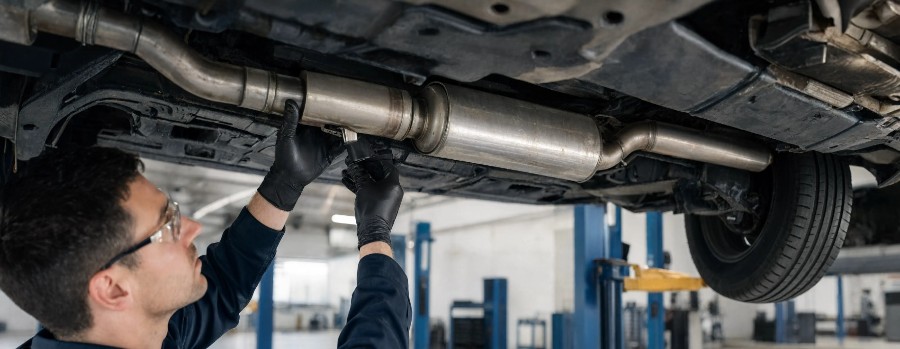
Your GMC's exhaust system spends most of its time doing a job you probably never think about.
Whether
you're driving a Sierra to work, taking the Yukon on a family trip, running
errands in an Acadia, or commuting around Erie in a Terrain, the exhaust system
works quietly underneath your vehicle.
It helps
carry combustion gases away from the engine, reduce exhaust noise, and work
with emissions-related components as your GMC operates.
But like
any other vehicle system, the exhaust can develop problems over time.
Sometimes
the first clue is a sound. Other times, you may notice an unusual smell, a
change in performance, or a warning light on the dashboard.
For GMC
drivers around Erie, Millcreek, Harborcreek, and the surrounding communities,
recognizing those changes can help you determine when it's time to have your
vehicle checked.
Here are
six signs your GMC's exhaust system may need service.
1. Your GMC Suddenly Sounds Different
You know
how your GMC normally sounds.
That's
why a sudden change in exhaust noise can be one of the easiest warning signs to
notice.
If your
Sierra develops a deeper rumble, your Acadia becomes noticeably louder, or your
Yukon suddenly sounds different during acceleration, there could be an issue
somewhere in the exhaust system.
Possible
causes can include an exhaust leak, damaged pipe, worn gasket, muffler problem,
or another component that has become loose or damaged.
Pay
attention to sounds such as:
·
A deep or unusually loud exhaust note
·
Hissing during acceleration
·
Popping or unusual exhaust sounds
·
Roaring that wasn't there before
·
A noticeable change in the vehicle's normal sound
The
sound itself doesn't necessarily tell you which component has failed.
That's
why an inspection is useful. A technician can locate the source of the noise
and determine whether a component needs repair or replacement.
The
takeaway: If your
GMC suddenly sounds louder than usual, don't assume it's simply a change in
engine sound. It could be your exhaust system asking for attention.
2. There's a Rattle Under Your GMC
A
metallic rattle coming from underneath your GMC can be particularly noticeable
when starting the engine, idling, accelerating, or driving over uneven roads.
One
possible cause is a loose or damaged heat shield.
Other
possibilities can include exhaust brackets, hangers, pipes, or other components
that have loosened or become damaged.
Your
exhaust system operates in a high-temperature environment and is exposed to
moisture, road debris, and changing road conditions. Over time, those
conditions can contribute to wear.
That
means a small rattle you notice while driving around Erie may not be something
you should simply learn to live with.
If the
sound becomes more frequent or louder, having the vehicle inspected can help
determine what's behind it.
And no,
turning up the radio doesn't count as an exhaust repair.
3. You Smell Exhaust Inside the Cabin
This is
one exhaust warning sign you shouldn't ignore.
Your
GMC's exhaust gases are supposed to be routed away from the passenger
compartment. If you begin noticing an exhaust smell inside your vehicle, it
could indicate a leak or another issue that needs attention.
You
might notice the odor while:
·
Idling in traffic
·
Sitting at a stoplight
·
Starting your GMC
·
Driving at lower speeds
·
Using the vehicle's ventilation system
Exhaust
odors inside the cabin deserve prompt attention.
If you
notice them, don't simply assume the smell will disappear on its own. Have the
vehicle inspected to determine where the odor is coming from and whether an
exhaust leak or another issue is present.
For
drivers regularly traveling through Erie traffic or spending time in
stop-and-go conditions, this is especially important to notice.
4. Your GMC Doesn't Feel as Responsive
Not
every exhaust problem announces itself with a noise.
Sometimes
you notice a difference when you press the accelerator.
If your
Sierra, Yukon, Acadia, Terrain, or another GMC suddenly feels sluggish,
struggles to accelerate, or doesn't respond the way it normally does, an
exhaust-related problem is one possibility.
A
damaged or restricted exhaust system can interfere with the efficient flow of
exhaust gases and may contribute to performance issues.
However,
sluggish acceleration doesn't automatically mean there's an exhaust problem.
Engine,
fuel, ignition, transmission, sensor, and other mechanical or electronic issues
can produce similar symptoms.
That's
why guessing at the cause can lead you in the wrong direction.
A proper
diagnostic inspection can help determine what's actually happening before
unnecessary parts are replaced.
If your
GMC feels noticeably different when merging onto roads around Erie or
accelerating onto the highway, it's worth finding out why.
5. The Check Engine Light Comes On
The
check engine light can be triggered by a wide range of problems, including
issues involving emissions and exhaust-related components.
Modern
GMC vehicles use sensors and emissions-control systems to monitor how the
engine and exhaust systems are operating. When the vehicle detects a problem,
it may store a diagnostic trouble code and illuminate the warning light.

That
doesn't mean every check engine light is an exhaust problem.
It could
be related to:
·
An emissions component
·
A sensor
·
Engine operation
·
Fuel-system issues
·
Ignition problems
·
Other vehicle systems
Instead
of guessing what the light means, proper diagnostics can help identify the
underlying cause.
And if
the check engine light is flashing, especially when accompanied by
severe drivability problems, don't treat it like a routine reminder.
Have the
vehicle evaluated promptly.
6. Your GMC's Fuel Economy Drops
A sudden
change in fuel economy can get your attention quickly.
If
you're making the same daily drives around Erie but suddenly find yourself
stopping for fuel more often, something may have changed.
Fuel
economy can be affected by plenty of factors, including tire pressure, driving
habits, weather, vehicle load, engine condition, and maintenance.
Exhaust
or emissions-related problems can also contribute in certain situations.
One trip
to the gas station isn't enough to diagnose an exhaust issue.
But if
reduced fuel economy appears alongside other symptoms—such as unusual exhaust
sounds, a check engine light, strange odors, or reduced performance—it makes
sense to have the vehicle inspected.
Sometimes
your GMC gives you several clues at once.
You just
have to connect them.
Why You Shouldn't Ignore Exhaust Problems
An
exhaust problem may begin with something that seems minor.
Maybe
it's a faint rattle when you start the vehicle. Maybe your GMC sounds slightly
louder than it did a few weeks ago.
But
small symptoms can become more noticeable over time, and delaying an inspection
can allow a damaged component to worsen.
More
importantly, an exhaust system is responsible for routing combustion gases away
from the passenger compartment.
That
makes an exhaust odor inside the cabin a symptom that deserves particular
attention.
A simple
rule is worth remembering:
If your
GMC sounds different, smells different, or drives differently, find out why.
An
inspection can help determine whether the issue is related to the exhaust
system or another part of the vehicle.
GMC Exhaust Service in Erie, PA
Your GMC
is built to handle everyday driving, work, family trips, and plenty of miles.
But even a capable vehicle needs regular maintenance and timely repairs.
Whether
you drive a GMC Sierra, Yukon, Acadia, Terrain, or another GMC model, changes
in sound, performance, fuel economy, or dashboard warnings shouldn't
automatically be dismissed.
For GMC
drivers in Erie, Millcreek, Harborcreek, and nearby northwestern Pennsylvania
communities, Rick Weaver GMC can help diagnose vehicle concerns and determine
what type of service your GMC may need.
If
you've noticed a new rattle underneath your vehicle, a louder exhaust note, an
unusual odor, reduced performance, or a check engine light, don't wait for the
symptom to become impossible to ignore.
Schedule
service with Rick Weaver GMC and get your GMC checked before a small concern
becomes a bigger interruption to your drive.
Because
your GMC has plenty of work to do around Erie.
It doesn't need an unexpected exhaust solo taking over the commute.