
How to Repair a Leaking Radiator: Signs, Causes & What to Do
You notice a puddle underneath your GMC.
Maybe there's a sweet smell coming from
under the hood. Maybe the temperature gauge is running hotter than usual. Or
perhaps you've spotted fluid on the driveway and started wondering, "Is my
radiator leaking?”
For drivers in Erie, a cooling system
problem can turn an ordinary trip into an inconvenient stop. Whether you're
commuting across town, heading out of Erie County, or preparing for a longer
drive through Northwest Pennsylvania, your GMC's cooling system needs to keep
doing its job.
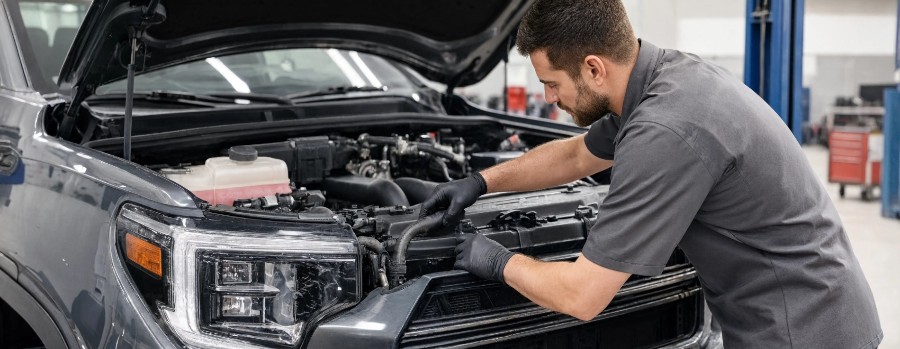
At the center of that system is the
radiator.
Your GMC's cooling system is designed to
regulate engine temperature and help prevent overheating. The radiator plays a
key role by transferring heat away from the engine coolant before that coolant
circulates back through the engine.
When the radiator develops a leak, the
cooling system can lose coolant and become less effective at managing engine
temperature.
At Rick Weaver GMC, our service
team can help diagnose cooling system concerns and determine the appropriate
repair for your GMC. Here's what to know if you suspect your radiator is
leaking.
Signs Your GMC Radiator May Be Failing
A radiator problem doesn't always begin
with an obvious puddle. Your GMC may provide several warning signs before a
cooling system problem becomes more serious.
1. Coolant Under Your
Vehicle
One of the clearest signs of a coolant
leak is fluid underneath your GMC.
Coolant can come in different colors
depending on the type used in your vehicle, so color alone isn't enough to
identify a leak. Coolant may also have a distinctive sweet smell.
If you notice an unfamiliar puddle
beneath the front or middle of your GMC, don't assume it's harmless. Different
fluids can leak from different areas of a vehicle, so identifying the source is
important.
A coolant leak may come from the radiator
itself, but hoses, connections, the water pump, thermostat housing, and other
cooling-system components can also be responsible.
2. A Sweet Coolant Smell
A sweet smell around your GMC can be
another clue.
Coolant has a distinctive odor,
particularly when it leaks onto warm engine components. You may notice the
smell after parking your vehicle or while standing near the front of the
vehicle.
If the smell keeps returning, especially
alongside a dropping coolant level, it's worth having the cooling system
checked.
You don't necessarily need to see a
puddle for a leak to be present.
3. The Temperature Gauge
Is Running Hot
Your GMC's temperature gauge can provide
an important warning.
If the gauge starts moving higher than
its normal operating position, your engine may not be receiving adequate
cooling.
A leaking radiator is one possible cause,
but low coolant, a cooling fan problem, a thermostat issue, a water pump
problem, or another cooling-system concern can produce similar symptoms.
If the temperature gauge approaches the
hot zone, don't continue driving simply to see whether it comes back down.
An overheating engine can turn a
relatively manageable cooling-system problem into a much more expensive repair.
4. Your Heater Isn't
Producing Normal Heat
Your GMC's cabin heater relies on hot
engine coolant to produce warm air.
If the heater suddenly isn't producing
the amount of heat you normally expect, particularly when combined with a low
coolant level or other cooling-system symptoms, it could indicate an issue with
coolant circulation.
This symptom alone doesn't prove that the
radiator is leaking, but it can be another clue that your cooling system needs
attention.
For Erie drivers, this can become
particularly noticeable during the colder months, when a properly functioning
heating system is more than just a comfort feature.
5. Steam From Under the
Hood
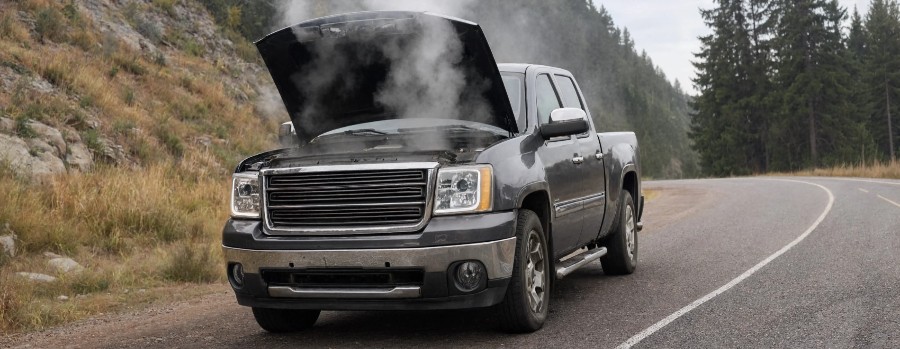
Steam coming from underneath the hood can
indicate that coolant is escaping or that the engine is overheating.
If you see steam, safely pull over and
shut the engine off as soon as it is safe to do so.
Never remove the radiator or coolant
reservoir cap while the engine is hot.Pressurized coolant can cause severe burns if released suddenly.
Allow the vehicle to cool before
attempting to inspect the cooling system.
If your GMC has overheated, professional
assistance is the safest next step.
What Can Cause a Radiator to Leak?
A radiator can develop a leak for several
reasons.
Repeated heating and cooling cycles can
eventually contribute to component deterioration. Road debris can also damage
radiator components, while hoses, connections, seals, and plastic tanks can
develop cracks or weaknesses over time.
Some common causes include:
·
Cracked radiator tanks
·
Damaged radiator hoses
·
Loose or damaged
connections
·
Corrosion
·
Road debris
·
Aging cooling-system
components
·
Excessive cooling-system
pressure
A leak doesn't necessarily mean the
radiator itself needs to be replaced.
The first step is determining where the
coolant is escaping. A technician can inspect the cooling system and identify
whether the problem is coming from the radiator or another component.
Can You Repair a Leaking Radiator Yourself?
It depends on the problem.
A loose connection or damaged hose clamp
may be relatively straightforward to address. But radiator leaks can be
difficult to repair reliably, particularly when the radiator itself has
developed a crack or other damage.
Products marketed as radiator sealers or
stop-leak solutions may temporarily reduce certain leaks, but they aren't a
substitute for diagnosing the underlying problem.
Your GMC's cooling system operates under
pressure and plays a critical role in protecting the engine. If the radiator is
damaged, professional diagnosis can help determine whether the component can be
repaired or needs to be replaced.
Using the correct coolant and replacement
components also matters. Always follow the specifications and recommendations
in your GMC owner's manual.
For more complicated cooling-system
problems, having the vehicle properly diagnosed can help prevent a temporary
fix from turning into a bigger problem later.
What About a Radiator Pressure Test?
A pressure test is one way technicians
can locate a cooling-system leak.
With the system properly prepared and the
engine cool, a pressure tester can help reveal leaks that aren't immediately
visible.
This can be particularly useful when
you're losing coolant but can't find an obvious puddle underneath the vehicle.
A professional inspection can also
determine whether the leak is coming from the radiator itself or another
component, such as a hose, connection, water pump, thermostat housing, or
another part of the cooling system.
This distinction matters because
replacing the radiator won't solve a leak that is actually coming from another
component.
GMC Cooling System & Radiator Repair in Erie, PA
A radiator leak may start with something
small—a damp spot, a faint smell, or a coolant level that seems a little lower
than usual.
But your cooling system has an important
job: helping keep your GMC's engine within its proper operating temperature.
At Rick Weaver GMC, our service center
offers Cooling System and Radiator Repair as well as Engine Diagnostic
services. Our GMC Certified Service experts are trained to understand the needs
of GMC vehicles and can help diagnose cooling-system concerns and determine the
appropriate repair.
Whether you drive a GMC Sierra, Acadia,
Terrain, Yukon, Canyon, or another GMC model, keeping your cooling system
properly maintained can help you stay ready for the road ahead.
So, if your GMC has started leaving
something behind in the driveway, don't wait for the puddle to become your
vehicle's way of asking for help.
Find the leak. Fix the problem. Keep your GMC cool.