
Is Your GMC Ready for Fall? 7 Service Checks Erie Drivers Shouldn't Ignore
Summer driving can put plenty of miles and wear on your GMC. Between daily commutes around Erie, weekend trips across Pennsylvania and longer drives during the warmer months, your vehicle has likely handled its share of road time.
As summer gives way to fall, changing
temperatures and increasingly wet roads can create different driving
conditions. Before freezing temperatures and winter weather arrive, fall is a
good time to make sure your GMC is ready for the months ahead.

You don't have to wait for a warning
light, unusual noise or difficult start before having your vehicle inspected.
Routine maintenance can help identify worn components and developing problems
while they're still easier to address.
At Rick Weaver GMC, owners can find
routine maintenance and repair services, including oil changes, tire rotations,
brake inspections, battery service and multi-point vehicle inspections.
Before fall driving gets underway, here
are seven areas worth checking on your GMC.
1. Check Your GMC's Oil and Oil Filter
Engine oil plays an important role in
keeping your GMC's engine running smoothly. It lubricates moving components,
helps manage heat and helps carry contaminants away from critical engine parts.
Your GMC's recommended oil-change
interval depends on the vehicle, engine, driving conditions and maintenance
schedule. Many newer GMC vehicles use an Oil Life System to help determine when
an oil change is needed, so you shouldn't automatically rely on a universal
mileage interval.
If you're not sure when your last oil
change was performed, check your maintenance records or your vehicle's oil-life
information. Fall can be a convenient time to catch up on an overdue oil change
before colder weather arrives.
During an oil-change visit, technicians
can also look for other maintenance needs that may be approaching.
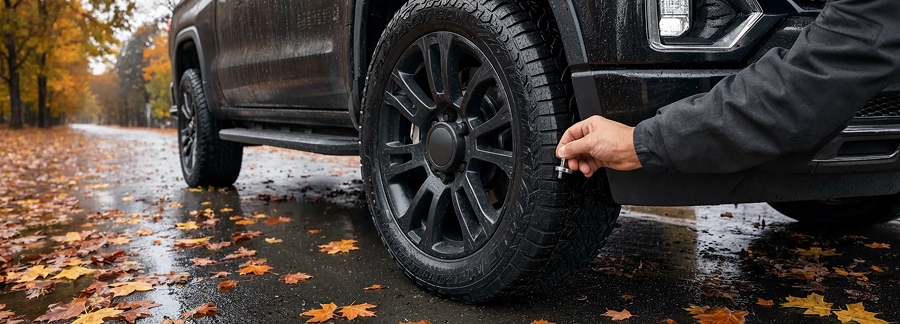
2. Inspect Your Tires and Wheel Alignment
Your tires are your GMC's only direct
point of contact with the road, making their condition important for handling,
braking and traction.
Before fall driving picks up, look for:
-
Uneven tread wear
-
Low tire pressure
-
Cracks, bulges or other
visible damage
-
Excessive vibration
-
Your GMC pulling to one
side
Erie drivers can encounter plenty of rain
and changing road conditions during the transition from summer into fall. As
temperatures continue to fall, maintaining proper tire pressure and adequate
tread becomes even more important.
If your GMC pulls to one side, the
steering wheel isn't centered while driving straight or the tires are wearing
unevenly, an alignment inspection may be worthwhile. Tire rotations performed
according to your GMC's maintenance schedule can also help promote more even
tread wear.
And if you're approaching winter with
tires that have limited tread remaining, fall is a good time to determine
whether they should be replaced before snow and ice become a factor.
3. Have Your GMC's Brakes Inspected
Your brakes work every time you slow down
in traffic, stop at an intersection or navigate changing road conditions. Brake
components naturally wear over time, and problems can become more noticeable as
conditions change.
Watch for signs such as:
-
Squealing or grinding
noises
-
Vibration or pulsation
while braking
-
A soft or unusual
brake-pedal feel
-
Increased stopping
distance
-
Pulling to one side while
braking
Even if your GMC isn't showing obvious
symptoms, a brake inspection can help identify worn brake pads, rotors, brake
lines or other components.
This is especially worth considering
before the colder months. Wet, snowy or icy roads can already make stopping
more difficult, so having a properly maintained braking system is important
when road conditions deteriorate.
Rick Weaver GMC's service department
offers brake inspections as part of its maintenance services.
4. Test Your GMC's Battery and Charging System
A battery that performs normally during
summer may struggle when temperatures drop.
Cold weather can make it harder for an
aging battery to provide the power needed to start your GMC. If your vehicle
has already been slow to start, requires a jump-start or experienced unusual
electrical behavior, those are good reasons to have the battery checked before
winter.
A battery test can help determine its
current condition and ability to hold a charge. A charging-system inspection
can also help identify potential problems with the components responsible for
maintaining the battery charge.
Rick Weaver GMC's multi-point vehicle
inspection includes a battery condition and connection check, making a seasonal
inspection a convenient opportunity to see where your battery stands.
5. Review Your GMC's Fluids, Filters and Wipers
Engine oil isn't the only maintenance
item worth checking before fall.
Depending on your GMC model and
maintenance schedule, technicians may inspect fluids associated with the
brakes, cooling system, transmission, and other vehicle systems. Maintaining
the appropriate fluid levels and condition can help
support proper operation as temperatures change.
Your filters also deserve attention. The
engine air filter helps keep contaminants from entering the engine, while the
cabin air filter helps filter the air entering the passenger compartment.
And don't overlook your windshield
wipers.
Fall can bring more rain and reduced
visibility, making worn wiper blades a nuisance at best and a safety concern at
worst. Rick Weaver GMC's multi-point inspection includes checking wiper blades
and glass condition, as well as fluid levels.
Rather than assuming every GMC needs the
same fluid or filter service at the same mileage, use your vehicle's specific
maintenance schedule to determine what needs to be inspected or replaced.
6. Don't Overlook Your GMC's 4WD, AWD or Drivetrain
Not every GMC is equipped with four-wheel
drive or all-wheel drive, but if yours is, its drivetrain should be included in
your maintenance plan.
Depending on the model and configuration,
your GMC may use a 4WD or AWD system with additional drivetrain components that
help distribute power and provide traction when road conditions become
challenging.
GMC models can have different drivetrain
configurations, so the maintenance requirements for a Sierra, Yukon, Acadia,
Terrain or another GMC vehicle may not be the same.
If your GMC is equipped with 4WD and
you've noticed difficulty engaging the system,
unusual noises or vibrations, have it inspected rather than assuming the
problem will go away. For AWD-equipped vehicles, changes in handling or unusual
drivetrain noises can also warrant an inspection.
Because drivetrain maintenance varies by
model, year and configuration, your GMC's owner information and recommended
maintenance schedule should determine what service is required.
7. Get a Multi-Point Inspection Before Winter Arrives
Some vehicle problems don't produce an
obvious warning light.
A multi-point inspection gives
technicians an opportunity to examine several important systems and identify
developing maintenance needs. Depending on the inspection, this can include
tires, wipers, fluid levels, brakes, battery condition, lights
and other vehicle components.
For Erie drivers, getting this inspection
before winter can be particularly useful. Instead of discovering a worn tire,
weak battery or brake issue after the first major
weather change, you can address potential problems while there's still time to
prepare.
Rick Weaver GMC's multi-point vehicle
inspection covers areas including tires, wipers and glass, fluid levels,
brakes, battery condition and connections, as well as additional vehicle
components.
Keep
Your GMC Ready for Erie Roads
Fall is a convenient reminder to review
your GMC's condition, but vehicle maintenance shouldn't be limited to one
season.
Regular service can help support your
GMC's reliability, performance and safety throughout the year. Whether your
vehicle needs an oil change, tire rotation, brake inspection, battery test,
fluid service or a more involved repair, addressing maintenance early can help
prevent smaller problems from becoming larger ones.
For drivers searching for GMC service
in Erie, Rick Weaver GMC's service center provides maintenance and repairs
for GMC vehicles. The service department handles maintenance such as oil
changes, tire rotations and brake inspections, along with other repair needs.
Whether you're preparing for your first fall commute, planning a Pennsylvania road trip or simply can't remember the last time your GMC received a thorough inspection, fall is a good opportunity to schedule service and make sure your vehicle is ready for the season ahead.